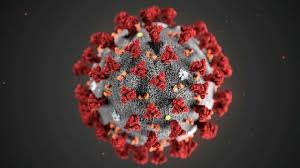
COVID-19 and Digitalising Medical Records

Twenty years ago the NHS began the process to take paper records and create digital summaries. Collating relevant data and standardising it is a complicated task, but when done properly, the current COVID-19 pandemic has provided a great example of just how invaluable digitalising medical records really is. We have seen a stream of reports published on the impact of COVID-19. This has helped policymakers better understand the demographics of those that have been affected. The primary care digitalising of medical records has given the country a database of patient records including such categories as  age groups and pre-existing conditions. From this analysis can work out which patients are most at risk, where to focus containment efforts, where the healthcare system will face strain, and which interventions can best mitigate the crisis.

Trained and experienced primary care staff have been central to the summarising and digitalising of medical records. In order to make better predictions on the spread and impact of Covid-19, more data from reliable sources is needed. Patients’ medical records are just one example of where life-saving information has been used to and gather valuable insights, which in turn

One strategy for reopening the economy before a vaccine is developed could involve monitoring the contacts of newly infected people, and knowing the individuals who are most at risk would make this a powerful and effective strategy. The more complete the data, the more effective this solution could be.

However there are still plenty of notes still sitting in practice cupboards, so this rich source of data still has some way to go before its exhausted. The primary care task now is to make the time to make it a key objective to finish the task, so that patients across all GP practices are given the benefit of having their risk profile considered as part of a risk management strategy in managing social distancing and for the greater public good.

While diseases can spread fast, verified data and knowledge can spread even faster, and that is where the focus needs to be. The importance of having a logical approach to summarising medical records and getting this data in the hands of analysts has never been stronger.

Woman given erectile dysfunction cream for dry eye in prescription mix-up

basic understanding of medical terminology and medicines

The importance of a basic understanding of medical terminology and medicines is as important as it ever was, and has been highlighted recently by this example of two medications with similar spellings – but for completely different complaints

A patient, had to be treated in hospital after she was given the wrong medication due to a mix-up.On attending the emergency department of a Glasgow hospital, the patient was found to have conjunctivitis and a defect on her cornea. However, the erectile dysfunction cream that was dispensed to her had a similar name, Vitaros, to the eye lubricant she was actually prescribed – VitA-POS. The patient suffered with blurred vision, a swollen eyelid and redness and discomfort immediately after putting the erectile dysfunction cream into her eye.

Experts have said GPs must use block capitals when writing prescriptions after a woman was mistakenly given erectile dysfunction cream for a dry eye

Eye doctors from Glasgow’s Tennent Institute of Ophthalmology, who treated the woman, have now written an article on the case in BMJ Case Reports, the medical journal

“It is unusual in this case that no individual, including the patient, general practitioner or dispensing pharmacist, questioned erectile dysfunction cream being dispensed to a female patient with ocular application instructions.

“We would like to raise awareness that medications with similar spellings exist,” the report said.

Importantly, doctors noted that one in 20 prescriptions were estimated to be affected by a prescribing error.

The original report can be read here

Training non-clinical staff in Primary Care

non-clinical staff in primary careOver the last 16 years I have delivered face to face training to non-clinical staff in primary care. In light of easy access to technology and information on the internet, what are the training needs today for non-medically trained professionals working in close contact with the medical profession?

What’s required of the role?

The class of 2016 are involved extracting and imputing key medical data from medical notes. Often referred to as note summarising, they scan medical reports onto IT systems and link them to a problem title. Then once this has been done read codes are attached to each medical diagnosis, operation or problem. This process requires clarity and key medical knowledge; it is not enough to record a patient as having had a hysterectomy (uterus removed). There are at least 10 different codes or ways of having a hysterectomy, and it must be correctly coded.

The non-clinical team also update medical summaries as letters arrive from hospital departments. Staff are expected to work with other agencies and need background information to deal with patients, doctors and other multidisciplinary staff.

Read more…

Medical terminology transcription errors ‘putting patients’ lives at risk’

Transcription errorsMedical terminology transcription errors could be putting patients lives at risk, because of a growing number of cash-strapped hospitals sending medical notes abroad to save money, Unison warned today.

The union has compiled a dossier showing that 21 NHS trusts are piloting the outsourcing of confidential patient information to India and South Africa, which are then sent back to the UK and added to patients’ individual records.

Read more…

To Err is Human – the impact of poor medical terminology training

To Err is human

Breast cancer, vehicle crashes, AIDS and medical error. Which do you think causes the most deaths per year? It may surprise you to learn that it is medical error.

A report issued by the U.S. Institute of Medicine (To Err is Human: Building a Safer Health System) concluded that up to 98,000 people die each year in the US as a result of preventable medical errors, including lack of medical terminology training. For comparison, fewer than 50,000 people died of Alzheimer’s disease and 17,000 died of illicit drug use in the same year.

Read more…

Medical terminology transcription errors

medical terminology

It is claimed that potentially life-threatening medical terminology transcription errors are creeping into medical letters that are being transcribed by secretaries in India

It is also possible that the use of computer spell checkers is leading to some words being replaced by unlikely ones. In one example, the drug “Lansoprazole”, used to treat stomach ulcers, was transcribed as the popular holiday resort “Lanzarote”.

Read more…